
Financial Support Navigator
Young entrepreneurs need more than just another grant. They need a clear pathway – from training and start-up capital to their first loan and business growth.
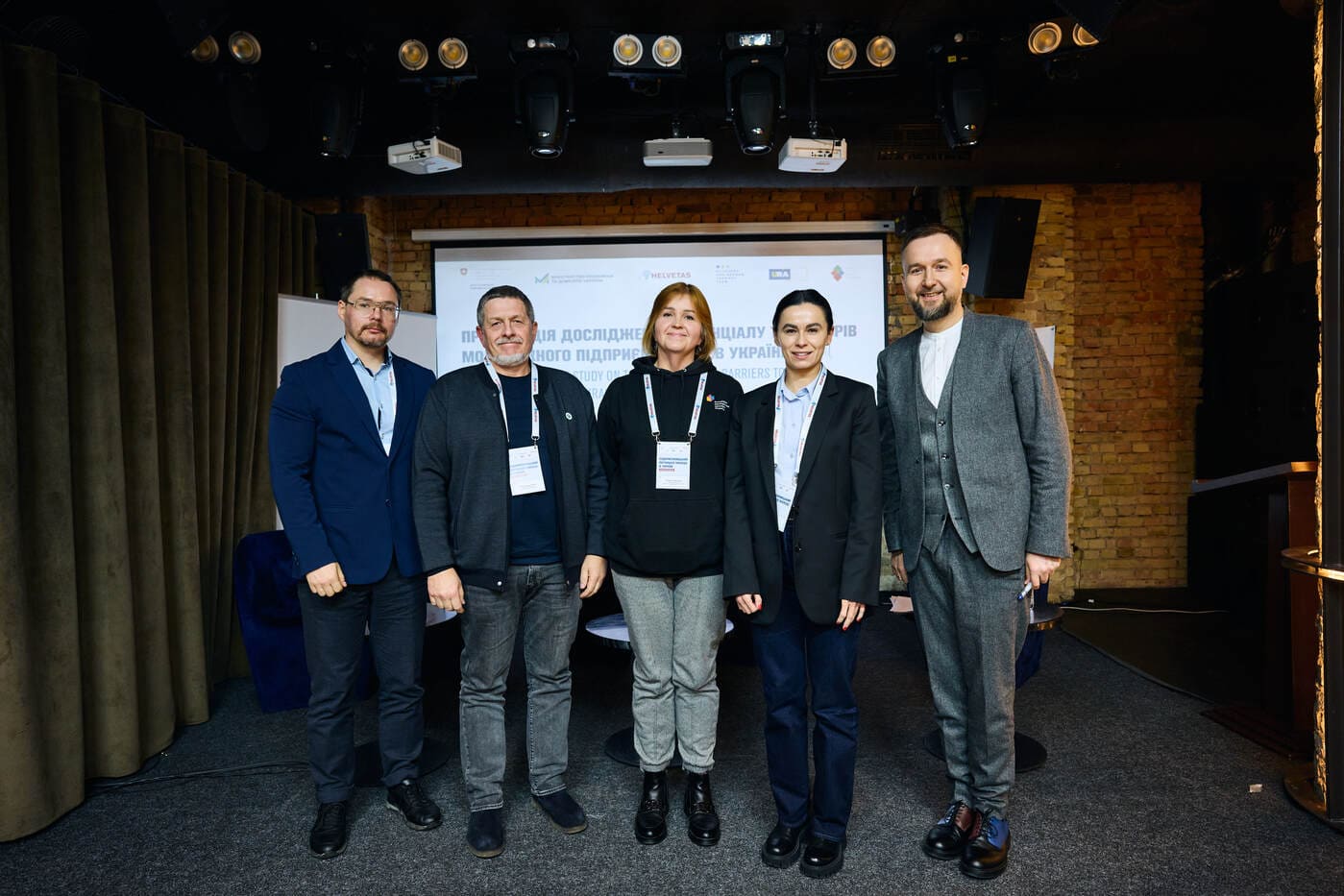
At the invitation of Helvetas, Vitalii Ulіantsev, Head of Donor-Funded Programmes at the National Development Institution (NDI), took part in the panel discussion “Access to Capital: Enabling Young Entrepreneurs to Start and Grow Their Businesses” during the presentation of a study on the entrepreneurial potential of young people in Ukraine.
For young entrepreneurs, the main challenge is not a lack of ideas, but the barriers to getting started: limited credit history, lack of collateral and insufficient business experience.
NDI’s Strategy for 2026 -2030 addresses these challenges by combining access to finance with training and business support. Building on pilot grant programmes that integrate training – including the programme in Kryvyi Rih District supported by the Government of Luxembourg – NDI is moving towards more comprehensive, large-scale solutions.
In spring 2027, NDI, together with the Council of Europe Development Bank (CEB) and the European Commission, plans to launch a microfinance programme with an initial funding allocation of EUR 10 million.
Young entrepreneurs under the age of 35 will receive the highest priority under the programme. They will be able to combine a UAH-denominated loan equivalent to EUR 5,000-50,000 with an investment grant of up to EUR 15,000 for equipment purchases.
This financing model is designed to reduce the borrower’s financial burden through grant support, while providing access to credit for further investment and business growth.
As highlighted during the discussion, combining training opportunities offered by partners with NDI’s financial instruments is key to enabling young people to build sustainable businesses and see their future in Ukraine.
The study was conducted under the Ukraine Economic Resilience Programme (ERP), supported by Switzerland through the Swiss Agency for Development and Cooperation (SDC). The programme is implemented by the ERP Consortium, comprising Prosper Global, Right to Protection, Helvetas Swiss Intercooperation and JERU (Joint Emergency Response in Ukraine), a partnership between Welthungerhilfe and Concern Worldwide.